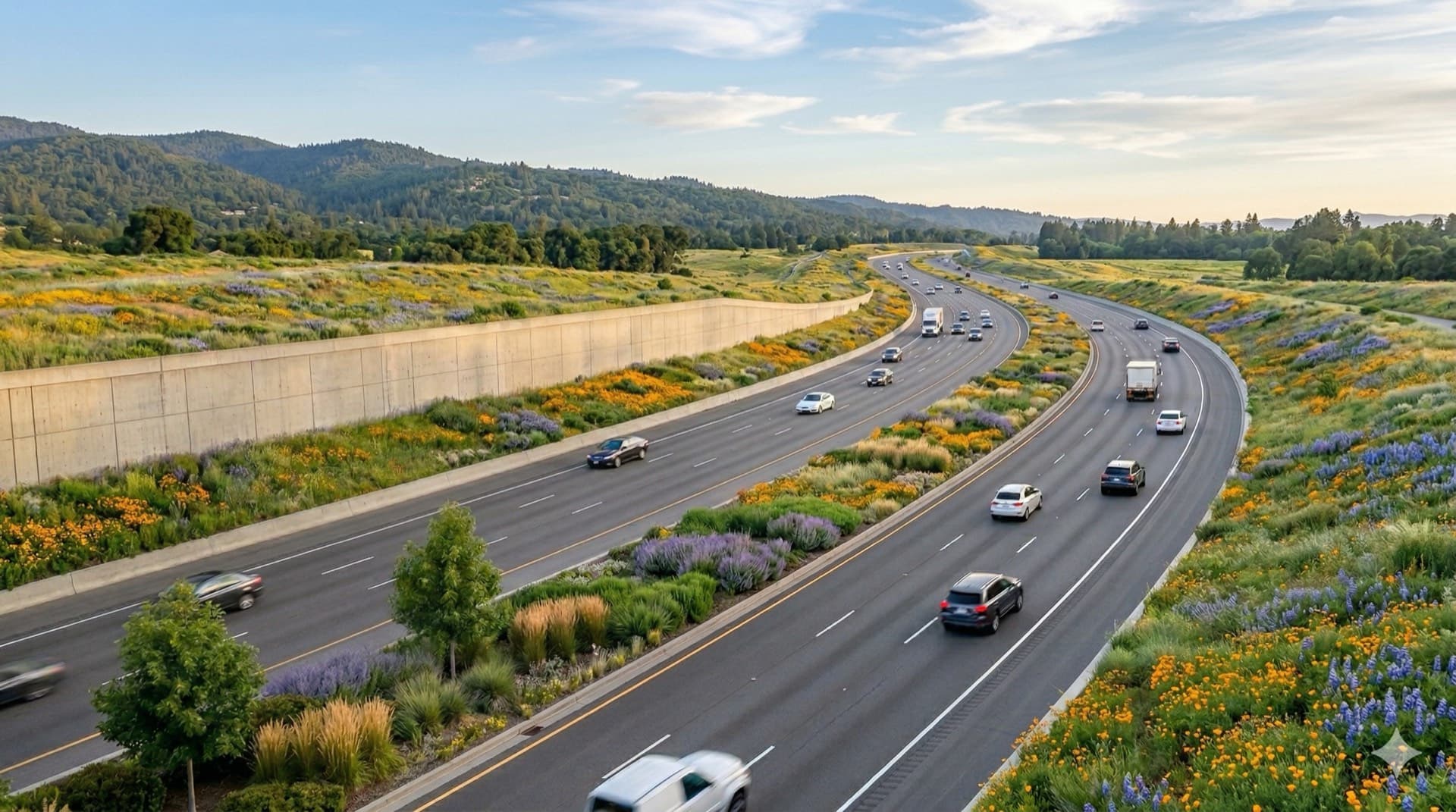
Expressway corridor with flowering median planting and landscaped embankments at sunset

Regional notes

Landscaping and Plantation in Bengaluru

The easiest major Indian city to plant in, and the one where clients expect the most. Mild temperatures, two rainfall seasons and red lateritic soil support a far wider palette than the north.

Covering Bengaluru, Mysuru and Karnataka corridors

Bengaluru’s climate removes the two constraints that dominate northern planting — winter cold and extreme summer heat — which opens up species that struggle elsewhere: foxtail palms, ixora, tabebuia avenues, ferns in outdoor shade, and a far broader ornamental range generally.

What replaces those constraints is water. The city’s groundwater has fallen steeply and the dry months between January and May are long enough to matter. The best Bengaluru landscapes are therefore designed around rainwater capture, hydro-zoning and shade-tolerant massing under existing canopy, rather than around irrigation availability.

The soil is red lateritic — free-draining and mildly acidic, which suits ixora and other acid-preferring ornamentals that are chronically chlorotic in NCR, but which is also low in organic matter and needs genuine amendment rather than a token dressing.

Growing conditions

RainfallRoughly 900–1,000 mm across both the south-west and north-east monsoons
TemperatureMild — about 15 °C to 35 °C, with no frost and no extreme summer
SoilRed lateritic, generally free-draining, moderately acidic and low in organic matter
Main challengeWater availability during the dry months and rapidly falling groundwater across the city

Calendar

Planting calendar for Bengaluru

WindowWhat to do
February–AprilDry season. Irrigation-dependent works only; tabebuia flowering peaks and should not be pruned.
May–JunePre-monsoon showers begin — good for planting shrubs and preparing beds for the main season.
July–SeptemberSouth-west monsoon; the primary tree planting window.
October–DecemberNorth-east monsoon rains give a strong second planting window, unusual among Indian cities.

Species

What performs in Bengaluru

Recommended

  • Tabebuia (Pink Trumpet Tree) The city’s signature avenue tree — synchronised pink flowering that defines Bengaluru streets in spring.
  • Foxtail Palm Thrives in the mild climate and self-cleans, so campus maintenance stays light.
  • Ixora The mildly acidic lateritic soil suits it; it performs here far better than in northern alkaline soils.
  • Korean Grass Fine ornamental turf that holds colour well in the mild climate at tech-park frontages.
  • Clumping Bamboo Fast tall screening for campus boundaries in a climate with no cold check on growth.
  • Jamun Strong native canopy and bird value for campus and avenue planting.

Use with caution

  • Thuja (Morpankhi) A dry-winter species that declines under Bengaluru humidity and mild temperatures.
  • Portulaca Rots in the extended rainfall periods; use only in raised, sharply drained beds.
  • Peepal Superb in open parkland, but its roots are a serious liability on the city’s tight, service-heavy plots.

Local factors

What catches projects out here

Two planting windows

Bengaluru is one of the few Indian cities with a genuine second planting season in October and November under the north-east monsoon. Programmes that use both finish faster with better survival.

Groundwater and rainwater

With borewell depths increasing across the city, rainwater harvesting and storage for irrigation is now a practical design input rather than a compliance box.

Lateritic soil needs organic matter

Free-draining red soil loses nutrients quickly. Beds need real organic amendment and mulch, otherwise ornamental planting stalls after the first year.

Bengaluru — frequently asked questions

Which trees are best for Bengaluru avenues?

Tabebuia rosea for the signature flowering display, jamun and arjuna for evergreen canopy and bird value, and pongamia for dense shade. Avoid gulmohar over roads — its limb failure risk is the same here as anywhere.

When is the best time to plant in Bengaluru?

June to September for the main season, and October to November for a genuine second window under the north-east monsoon. Both beat the dry February-to-May period.

Why does ixora do so well in Bengaluru but not in Delhi?

Soil chemistry. Bengaluru’s red lateritic soil is mildly acidic, which ixora prefers; NCR’s alkaline alluvial soil and hard water cause the iron chlorosis that yellows it every season.

Working on a site in Bengaluru?

We are based in Noida and run crews across the region. Send the site details to hello@gnix.in and we will come back with species, timing and a realistic maintenance requirement.

WhatsApp