
Horticulture operations
Mowing, edging, hedge clipping, shrub pruning, weeding, basin maintenance and litter clearance on a fixed cycle.
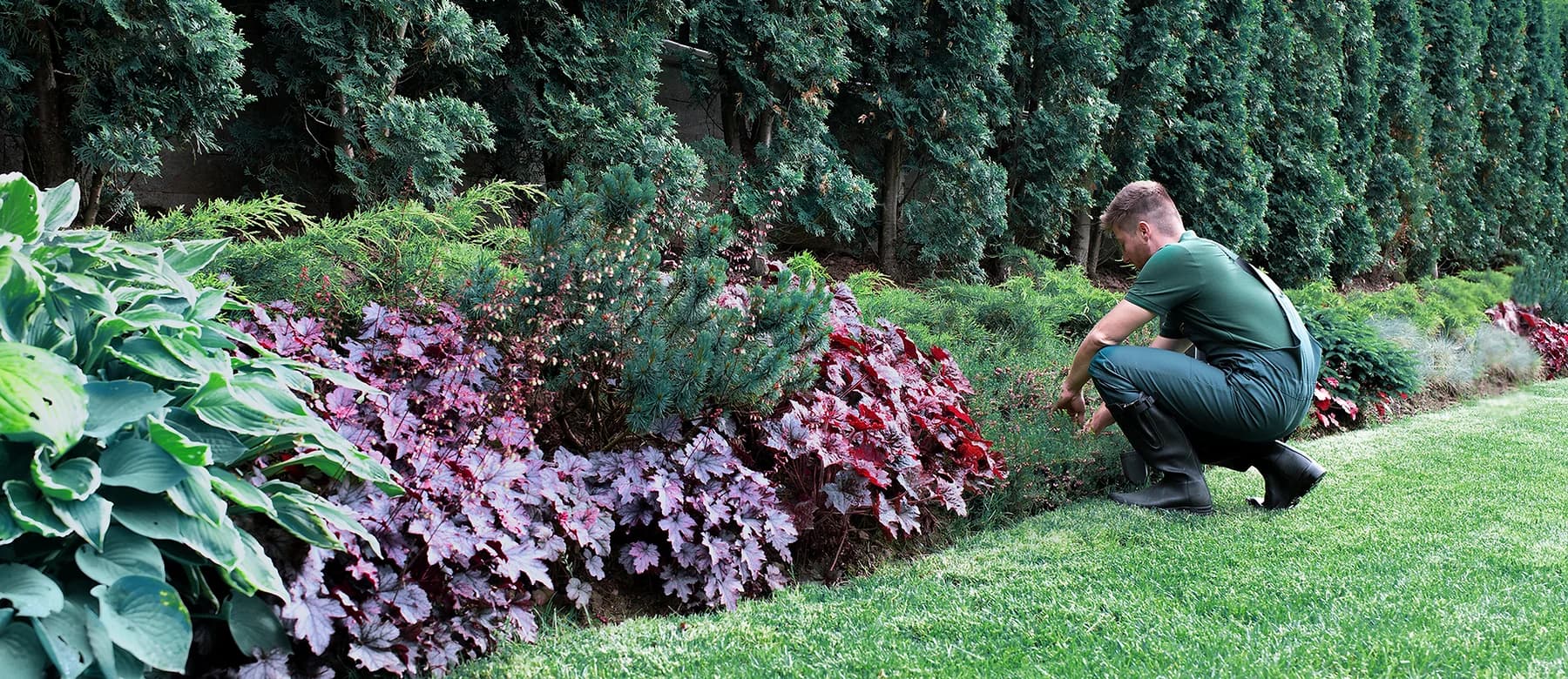
Annual contract
Annual maintenance contracts that keep planted assets looking deliberate — with a written calendar, defined KPIs and reporting instead of an unscheduled crew.
Landscape maintenance is where most Indian projects quietly lose the value of their landscape investment. The planting is delivered, the contract ends, an unsupervised crew arrives on no fixed schedule, and within two years the hedges have lost their line, the medians are overgrown and half the drip line is blocked.
A maintenance contract worth signing has three things: a written calendar tied to the season, defined standards for each element — hedge height, mowing frequency, replacement turnaround — and reporting that tells the client what happened without them having to walk the site.
GNIX runs annual maintenance across corridor plantations, city-wide greenery, campuses and vertical gardens, including the annual maintenance of installed greenery across Prayagraj city under the Prayagraj Development Authority.
| Lawn mowing | Weekly to fortnightly in growing season; 3-weekly in winter |
|---|---|
| Hedge clipping | 4–6 cycles a year for duranta; 3–4 for ficus panda |
| Median shrub pruning | Two hard cuts a year minimum to hold sight-line height |
| Irrigation servicing | Monthly checks, quarterly deep servicing, pre-summer full inspection |
| Replacement turnaround | Defined in contract — typically 15–30 days from identification |
| Reporting | Visit log plus quarterly condition report with photographs |
Scope
Mowing, edging, hedge clipping, shrub pruning, weeding, basin maintenance and litter clearance on a fixed cycle.
Emitter flushing, filter cleaning, leak repair, controller scheduling and seasonal adjustment of run times.
Scheduled inspection, nutrition programme, and integrated pest management rather than reactive spraying.
Defined turnaround for replacing failed plants, with species matched to the original specification.
Annual colour changes, post-monsoon replanting and pre-event preparation where the site requires it.
Visit logs, photographic records, plant health notes and a periodic condition report against agreed KPIs.
Method
Plant library
Each entry carries mature size, spacing, water demand, planting window and the maintenance cycle it commits you to.
Duranta erecta "Golden Edge"
The bright chartreuse hedge that gives Indian landscapes their colour block — fast, cheap, endlessly clippable and visible from a distance without any flowers at all.
Cynodon dactylon "Selection No. 1"
India’s standard hard-wearing lawn grass: fast to establish, cheap to lay, recovers from footfall, and the only sensible choice where people actually walk on the lawn.
Nerium oleander
The standard Indian median shrub: continuous flowering, near-total drought tolerance, immunity to vehicle pollution — and toxic in every part, which decides where it can go.
Ficus microcarpa "Panda"
The glossy dark-green workhorse of Indian formal hedging and topiary — dense, shade-tolerant, indestructible, with a root system that needs watching near structures.
Ixora coccinea
The dense, compact, glossy-leaved flowering shrub used for formal massing at entrances and along walkways — dependable in the south and east, fussier about winter in the north.
Evidence
CompletedExpressway
Avenue and median plantation with maintenance on one of the most heavily used access-controlled corridors in the National Capital Region.
CompletedExpressway
Structured plantation and sustained maintenance on a major NCR bypass corridor built to divert heavy vehicle traffic around Delhi.
CompletedVertical garden
Modular green walls installed and maintained across three flyovers, turning grey infrastructure surfaces into continuous planted facades.
A written seasonal calendar, defined standards for each element, irrigation servicing, plant health management, a replacement turnaround commitment and periodic reporting. A contract priced only as "manpower per month" measures nothing.
Shrub masses need at least two hard cuts a year to stay under sight-line height, with additional trims on urban corridors. Hedges need four to six clips. Anything less and the corridor looks neglected for most of the year.
Yes, and it is common. We start with a condition audit, because inherited sites usually have irrigation faults and species mismatches that maintenance alone cannot compensate for.
Read next
Maintenance · 4 min read
How to write and evaluate a landscape AMC — frequency tables, measurable standards, replacement turnaround, irrigation servicing, reporting and the pricing models that quietly guarantee decline.
Read the guideDesign · 4 min read
Designing for the maintenance budget that will actually exist: lawn reduction, massing over bedding, hydro-zoning, edge detail, species discipline and the ten-year cost comparison.
Read the guideRelated
Core service
Full softscape execution for campuses, townships, industrial sites and public realm — from soil and levels through planting, lawns and irrigation to a working maintenance handover.
Service detailCorridor execution
Avenue, median, embankment and interchange planting for expressway and highway packages — designed for survival at handover, not just for the drawing.
Service detailSpecialist system
Modular green walls on live infrastructure and building facades — engineered for structural load, irrigation redundancy and the maintenance access that keeps them alive after year one.
Service detailSend the site details, the drawings if you have them, and the maintenance budget you expect. You will get an honest read on species, timing and what the site can actually sustain.