
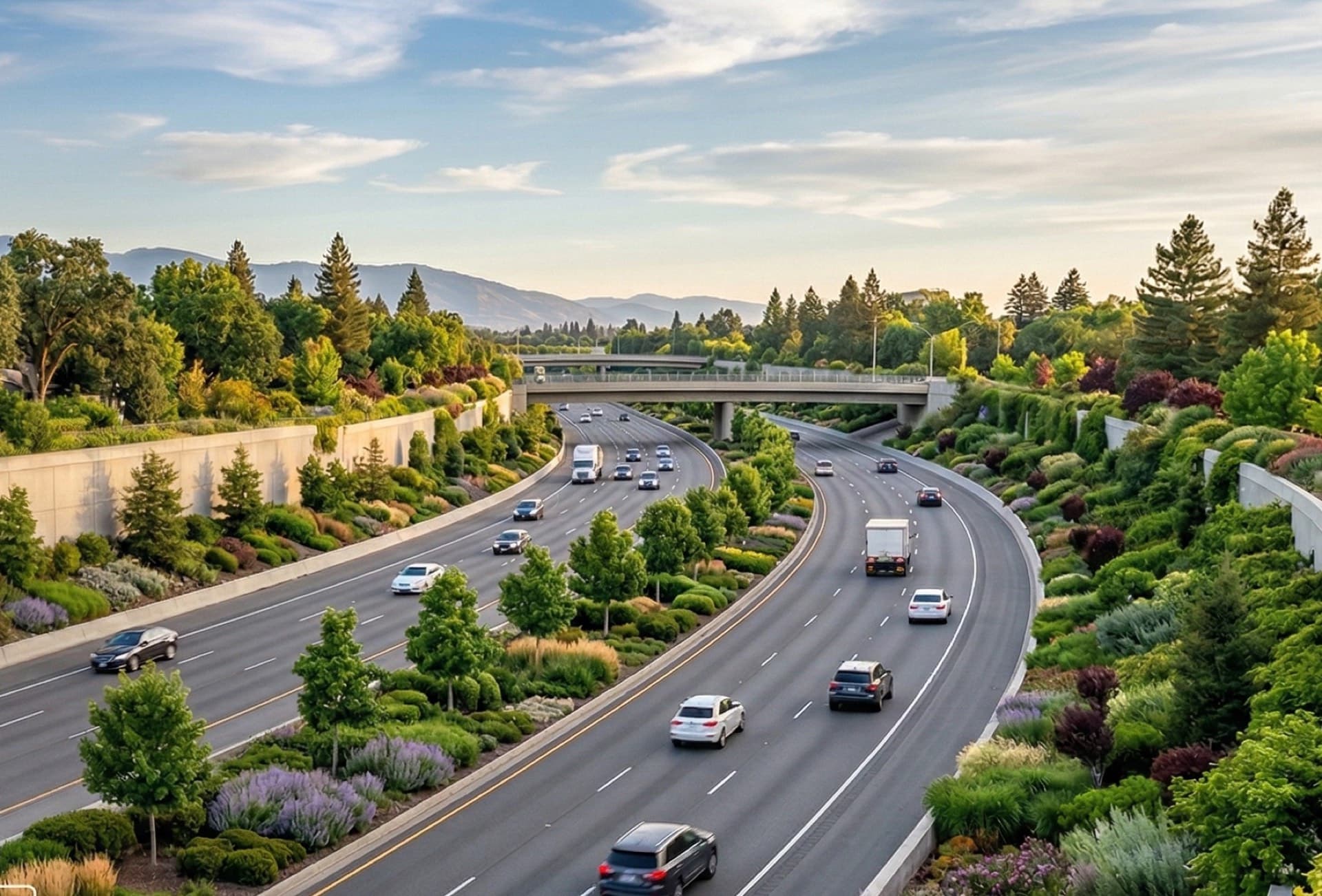
Glare-cut height on medians
A headlight-glare screen needs 1.2–1.5 m of dense foliage held continuously. Gaps below 600 mm defeat the purpose entirely.
4 species
Duranta, ficus panda, clumping bamboo and thuja — clipping frequency, screening height, glare-cutting performance and boundary use in Indian landscapes.
Hedges do the unglamorous structural work: they cut headlight glare on divided carriageways, hide service yards, define plot edges and give a campus its geometry. Their whole value depends on one thing — whether the maintenance contract can actually keep them clipped.
A hedge specified at 900 mm and clipped twice a year looks deliberate. The same hedge clipped once a year looks abandoned. Choose species by clipping tolerance and regrowth speed, and be honest about the maintenance cycle you are funding.
Selection
A headlight-glare screen needs 1.2–1.5 m of dense foliage held continuously. Gaps below 600 mm defeat the purpose entirely.
Duranta and ficus panda take hard shearing and come back dense. Flowering species clipped to a plane simply stop flowering.
Running bamboos escape into pavements and neighbouring plots. On built sites, specify clumping bamboo only.
Screens fail from the bottom up. Plant at correct spacing and tip-prune early so the base thickens before the top closes.
Species
Duranta erecta "Golden Edge"
The bright chartreuse hedge that gives Indian landscapes their colour block — fast, cheap, endlessly clippable and visible from a distance without any flowers at all.
Ficus microcarpa "Panda"
The glossy dark-green workhorse of Indian formal hedging and topiary — dense, shade-tolerant, indestructible, with a root system that needs watching near structures.
Bambusa multiplex
A fast vertical screen that does not run: clumping bamboo gives 3–5 m of dense green in two seasons without the invasive behaviour that makes running bamboo a liability.
Platycladus orientalis
The conical evergreen conifer of North Indian gardens and institutional frontages — formal, tidy, cold-hardy, and unforgiving of both waterlogging and hard pruning.
Other categories
Send the site details, the drawings if you have them, and the maintenance budget you expect. You will get an honest read on species, timing and what the site can actually sustain.