
Structural and load assessment
Saturated weight of modules, media, plants and water calculated against the host structure, with fixing details signed off before installation.
Specialist system
Modular green walls on live infrastructure and building facades — engineered for structural load, irrigation redundancy and the maintenance access that keeps them alive after year one.
A vertical garden is the most failure-prone thing in landscape architecture, because it removes every buffer a plant normally has. Media volume is tiny, the wall reflects heat, roots cannot chase moisture, and a pump failure in May kills the installation in about seventy-two hours. The walls that survive are the ones where structure, irrigation and maintenance access were engineered before the species list was drawn.
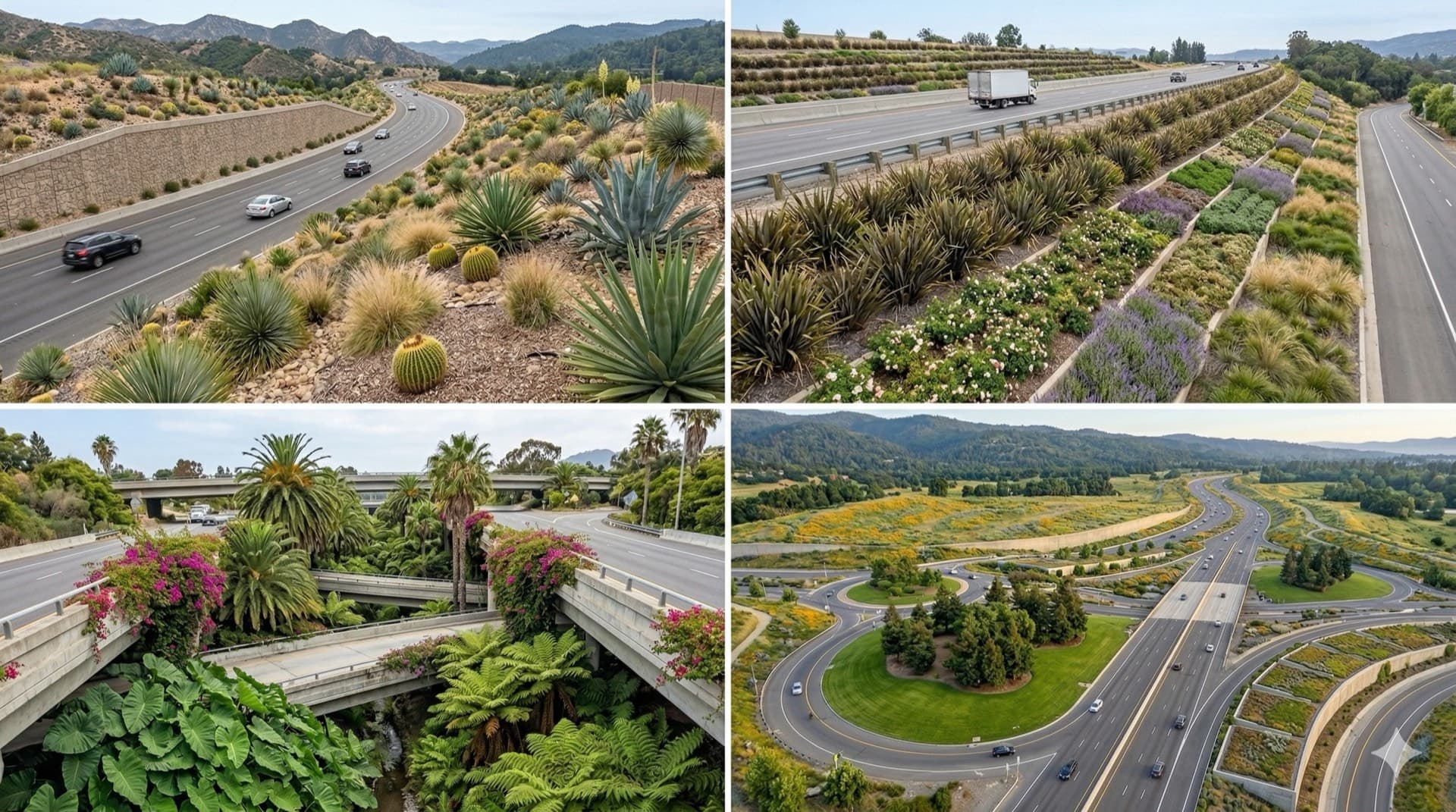
GNIX has built and maintained roughly 34,000 sq ft of vertical garden on live public infrastructure: 24,000 sq ft across three flyovers in Jalandhar under Jalandhar Smart City, and 10,000 sq ft on four DMRC metro stations in Noida under the Noida Industrial Development Authority. Both are exposed, high-traffic, difficult-access installations — the hardest version of the problem.
Our approach starts with the boring questions. What is the saturated load per square metre? Where does the water come from and what happens when the pump stops? How does a maintenance crew reach row fourteen? Answer those, and the horticulture is straightforward.
| Planting density | 25–36 plants per square metre in modular systems |
|---|---|
| Saturated system weight | Typically 50–120 kg per square metre depending on system |
| Irrigation | Zoned drip, dual pump, filtration, flow alarm and manual bypass |
| Time to full cover | 8–12 weeks in warm weather with reliable irrigation |
| Maintenance cycle | Fortnightly to monthly visits; quarterly deep servicing |
| Delivered to date | 34,000 sq ft on flyovers and metro stations |
Scope
Saturated weight of modules, media, plants and water calculated against the host structure, with fixing details signed off before installation.
Frame, module and backing-panel systems selected for the exposure — flyover soffit, metro facade, building elevation or interior lobby.
Zoned drip with dual pumps, filtration, flow monitoring, manual bypass and dosing for liquid feed. The single most important system on the wall.
Planting mapped to measured light across the wall face — rhoeo and sun-tolerant species in exposed bands, syngonium and ferns in shaded zones.
How the wall is reached for trimming, replacement and repair, planned at design stage rather than discovered in year two.
Scheduled trimming, replacement, media top-up, irrigation servicing and reporting — including on walls installed by other contractors.
Method
Plant library
Each entry carries mature size, spacing, water demand, planting window and the maintenance cycle it commits you to.
Syngonium podophyllum
The backbone species of Indian green walls: fast, forgiving, available in green, cream and pink forms, and able to regrow from a hard cut-back in place.
Epipremnum aureum
The most forgiving plant in Indian interior and vertical landscaping — trailing, variegated, nearly impossible to kill, and the standard filler for green walls and planter edges.
Tradescantia spathacea
The purple-backed rosette that survives full sun on a green wall and doubles as a hard-wearing groundcover — the toughest plant in the vertical garden palette.
Nephrolepis exaltata
The soft texture layer of a green wall — lush and immediately convincing in shade and humidity, and the first species to fail when irrigation slips.
Chlorophytum comosum
A striped arching rosette that fills modules fast, propagates itself on runners and tolerates the light swings that kill fussier green-wall species.
Evidence
CompletedVertical garden
Modular green walls installed and maintained across three flyovers, turning grey infrastructure surfaces into continuous planted facades.
CompletedVertical garden
Green walls on four operational DMRC metro stations, bringing planted surfaces into daily commuter infrastructure.
Cost is driven by the system, the height and the access, not by the plants. A modular exterior wall on a facade with easy access sits at one end; a flyover soffit needing traffic management and a boom lift sits far higher. Always price the five-year maintenance alongside the installation — that is where the real cost of a green wall lives.
Irrigation failure first, wrong species for the light band second, and no maintenance access third. Plant health is almost never the root cause; it is the symptom.
Rhoeo for exposed sun bands, syngonium and money plant for shaded and semi-shaded zones, spider plant in the middle, and ferns only where humidity is reliable. Species that resprout from a hard cut-back are strongly preferred.
Yes. We take over existing installations regularly. The first visit is an audit of irrigation, structure and species suitability, because those three determine whether maintenance alone can fix the wall.
Read next
Vertical gardens · 5 min read
A practical guide to green walls on Indian buildings and infrastructure — system types, structural load, irrigation redundancy, species zoning by light, maintenance access and realistic running costs.
Read the guideMaintenance · 4 min read
How to write and evaluate a landscape AMC — frequency tables, measurable standards, replacement turnaround, irrigation servicing, reporting and the pricing models that quietly guarantee decline.
Read the guideRelated
Annual contract
Annual maintenance contracts that keep planted assets looking deliberate — with a written calendar, defined KPIs and reporting instead of an unscheduled crew.
Service detailCore service
Full softscape execution for campuses, townships, industrial sites and public realm — from soil and levels through planting, lawns and irrigation to a working maintenance handover.
Service detailAdvisory
Advice before execution — species strategy, plantation planning, tender scope review and honest assessment of what a site and its maintenance budget can actually sustain.
Service detailSend the site details, the drawings if you have them, and the maintenance budget you expect. You will get an honest read on species, timing and what the site can actually sustain.