
Soil, levels and drainage
Topsoil assessment and import, subgrade ripping, grading to falls, and drainage where water will otherwise stand. The unglamorous half of the job that determines the rest.
Core service
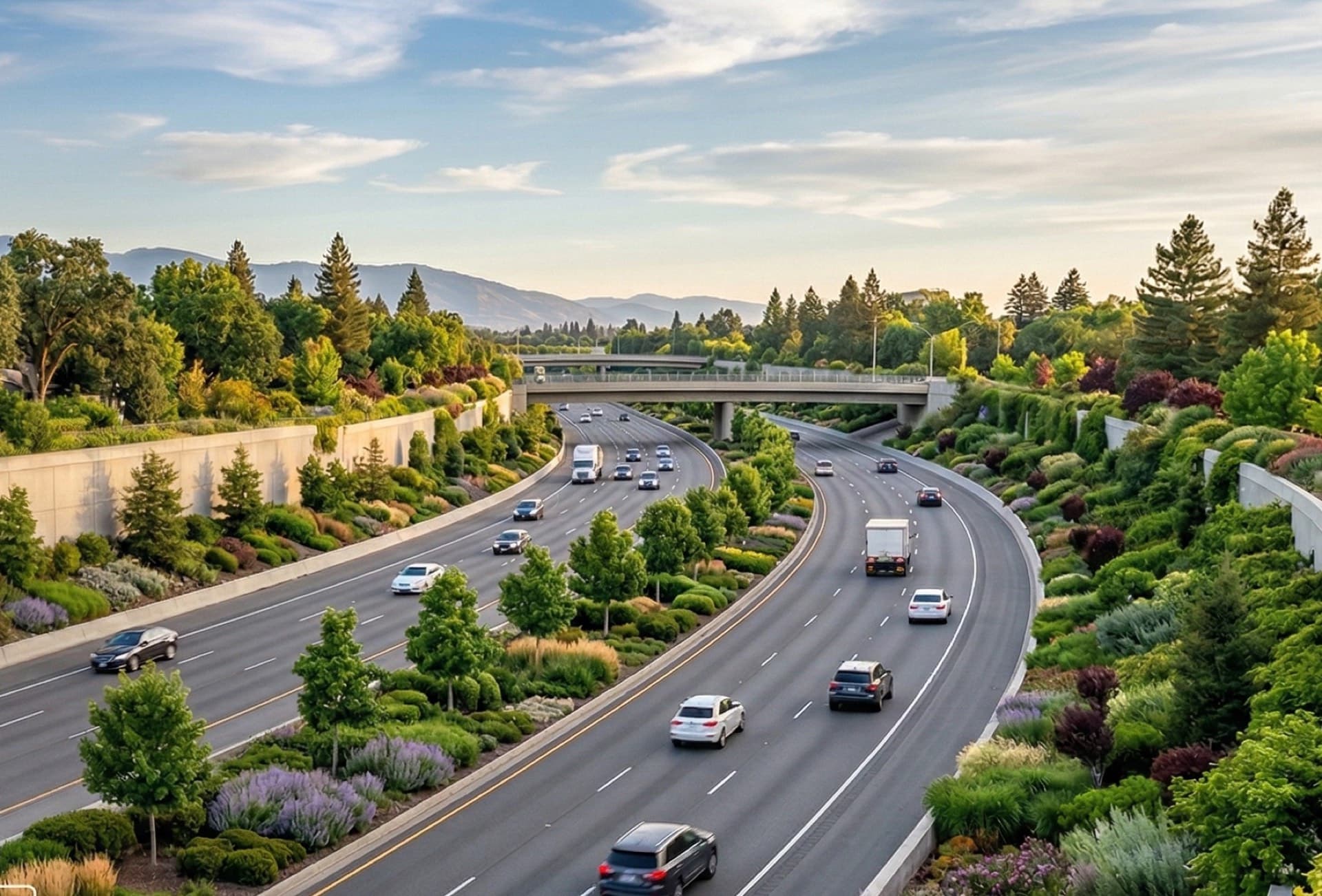
Full softscape execution for campuses, townships, industrial sites and public realm — from soil and levels through planting, lawns and irrigation to a working maintenance handover.
Most landscape drawings are optimistic about three things: the depth of usable soil on site, the water that will actually be available in May, and how much maintenance the client will fund. Execution is where those optimisms get resolved, and a good contractor resolves them before planting rather than after.
GNIX takes landscape packages from levels and soil through to a planted, irrigated, maintainable site. We work on corporate campuses, industrial plants, townships, institutional grounds, hospitality sites and public parks, and we plan every scheme around the maintenance regime it will realistically receive — which usually means less lawn, more massed planting, tighter water zoning and species that survive an ordinary year.
The work has included greenery development, transplantation, drip irrigation and maintenance for Omaxe developments in Noida, Gurugram and Jaipur, ABW Suncity Gurugram, Claridges Hotel New Delhi and The Oberoi New Delhi, alongside authority-led landscaping in Greater Noida and city-scale work across Prayagraj.
| Topsoil depth | 300 mm for beds, 150–200 mm for lawn, 600 mm+ for tree pits |
|---|---|
| Shrub densities | 4–9 per square metre; groundcovers 9–16 per square metre |
| Turf establishment | 4–6 weeks for Cynodon sods, 3–6 months for Zoysia plugs |
| Irrigation zoning | Separate zones for lawn, shrub beds and low-water massing |
| Establishment period | 90 days intensive, then routine maintenance |
Scope
Topsoil assessment and import, subgrade ripping, grading to falls, and drainage where water will otherwise stand. The unglamorous half of the job that determines the rest.
Specimen placement, avenue rows, hedges and massed beds, with nursery stock inspected at source and set with correct pits, backfill and support.
Turfing with Selection-1 or fine Zoysia depending on use, plugged groundcovers, and edge detailing that stops grass invading beds for the life of the site.
Drip for beds, sprinkler for lawns, hydro-zoning by water demand, and controllers set to a written schedule rather than to whatever the pump operator prefers.
Entrance beds, annual colour cycles, planters and focal specimens for the parts of a site that carry the visitor impression.
As-built planting plan, irrigation schedule, species register and a maintenance calendar the site team can actually follow.
Method
Plant library
Each entry carries mature size, spacing, water demand, planting window and the maintenance cycle it commits you to.
Roystonea regia
The default statement palm for Indian boulevards and corporate entrances: a smooth grey concrete-like trunk, a green crownshaft and an arching feather crown that reads clearly at 80 km/h.
Ficus microcarpa "Panda"
The glossy dark-green workhorse of Indian formal hedging and topiary — dense, shade-tolerant, indestructible, with a root system that needs watching near structures.
Ixora coccinea
The dense, compact, glossy-leaved flowering shrub used for formal massing at entrances and along walkways — dependable in the south and east, fussier about winter in the north.
Cynodon dactylon "Selection No. 1"
India’s standard hard-wearing lawn grass: fast to establish, cheap to lay, recovers from footfall, and the only sensible choice where people actually walk on the lawn.
Duranta erecta "Golden Edge"
The bright chartreuse hedge that gives Indian landscapes their colour block — fast, cheap, endlessly clippable and visible from a distance without any flowers at all.
Tabebuia rosea
The tree that turns whole streets pink for three weeks in late winter — medium-sized, well-behaved and increasingly the signature avenue tree of Bengaluru and Hyderabad.
For a typical corporate campus, six to twelve weeks of ground works and planting, plus a ninety-day establishment period. Monsoon planting compresses risk; summer planting extends the irrigation burden considerably.
Usually soil and water, not plants. Imported topsoil, drainage, irrigation infrastructure and the establishment watering cycle routinely exceed the cost of the planting material itself.
Only as much as people use. Lawn costs roughly three to four times as much to run over ten years as shrub-and-groundcover massing of the same area, so it belongs in event and recreation spaces rather than everywhere by default.
Read next
Species selection · 5 min read
Which lawn grass for which situation — traffic tolerance, water demand, mowing load, shade behaviour and ten-year running cost, with the honest case for using less lawn.
Read the guideWater · 5 min read
How to size, zone and maintain landscape irrigation: hydro-zoning, emitter selection, run-time calculation, filtration, and the maintenance regime that keeps a drip system working past year two.
Read the guideDesign · 4 min read
Designing for the maintenance budget that will actually exist: lawn reduction, massing over bedding, hydro-zoning, edge detail, species discipline and the ten-year cost comparison.
Read the guideRelated
Annual contract
Annual maintenance contracts that keep planted assets looking deliberate — with a written calendar, defined KPIs and reporting instead of an unscheduled crew.
Service detailAdvisory
Advice before execution — species strategy, plantation planning, tender scope review and honest assessment of what a site and its maintenance budget can actually sustain.
Service detailSupply and placement
Sourcing, transporting, planting and establishing palms and specimen ornamentals — graded by clear trunk and root ball, not by photograph.
Service detailSend the site details, the drawings if you have them, and the maintenance budget you expect. You will get an honest read on species, timing and what the site can actually sustain.