
Access for maintenance on a live expressway
Watering, pruning and gap-filling on an access-controlled corridor means working within traffic management windows. Any species requiring frequent attention becomes a safety and cost problem.
Expressway · Completed
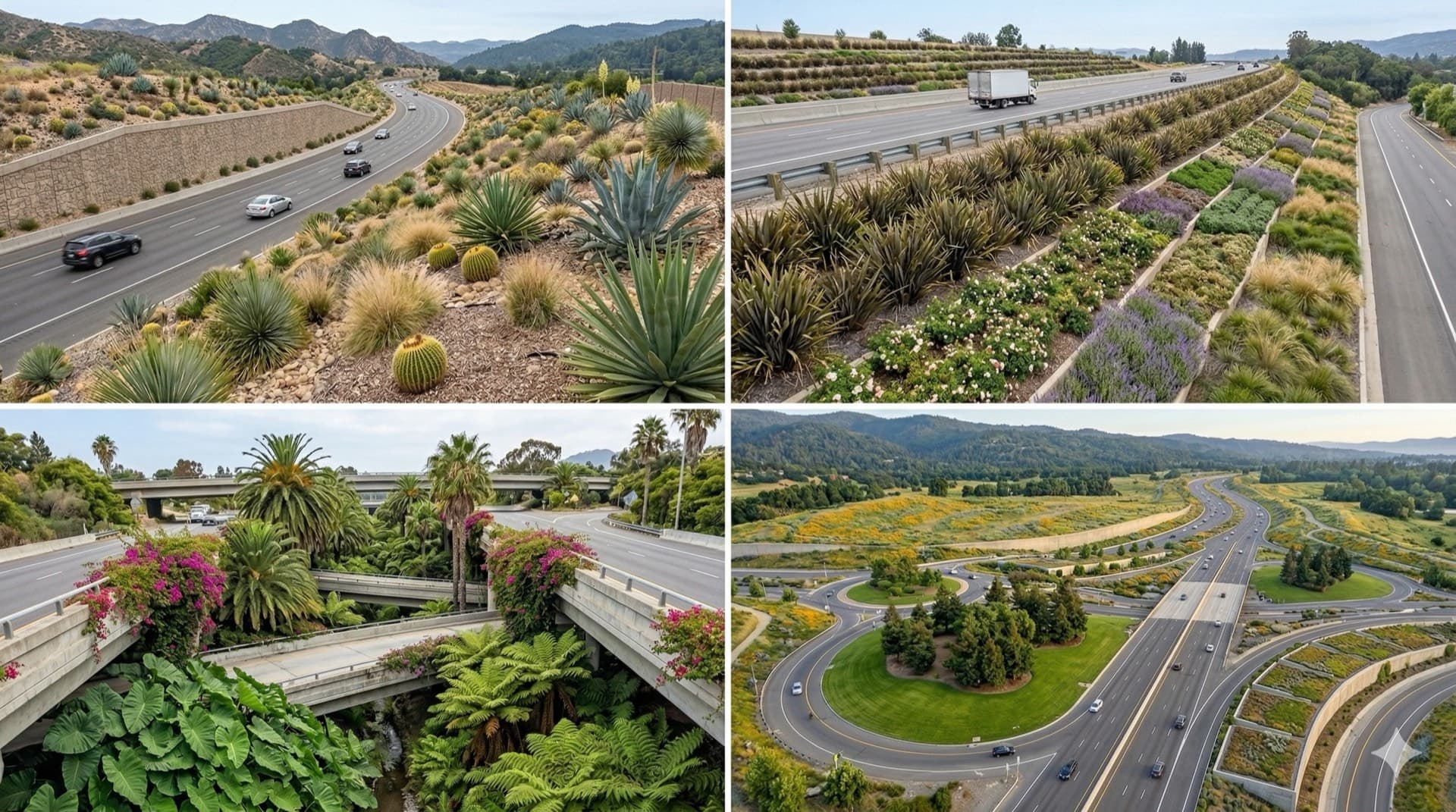
Avenue and median plantation with maintenance on one of the most heavily used access-controlled corridors in the National Capital Region.
The Delhi–Meerut Expressway carries dense, continuous traffic through one of the most polluted airsheds in India, across alluvial soils that swing from dry compacted subgrade in May to saturated in August. Corridor planting here has to survive urban air, road dust, restricted median soil volume and a maintenance environment where lane closures for watering are a genuine constraint.
The package combined avenue-side plantation with median treatment and the maintenance period that follows — the phase in which most Indian corridor plantings are lost.
| Client | National Highways Authority of India |
|---|---|
| Corridor type | Access-controlled expressway |
| Scope | Plantation and maintenance |
| Key constraint | Live-traffic maintenance access |
Constraints
Watering, pruning and gap-filling on an access-controlled corridor means working within traffic management windows. Any species requiring frequent attention becomes a safety and cost problem.
Median beds sit over compacted subgrade with limited depth, so species with high water demand or large root plates fail regardless of care.
Continuous heavy traffic coats foliage, suppressing photosynthesis and encouraging sap-feeding pests on sensitive species.
Approach
Outcome
Palette
avenue trees
Azadirachta indica
The most reliable avenue tree in India: evergreen shade, extreme drought tolerance, no serious pest problems and roots that behave near pavement.
flowering shrubs
Nerium oleander
The standard Indian median shrub: continuous flowering, near-total drought tolerance, immunity to vehicle pollution — and toxic in every part, which decides where it can go.
flowering shrubs
Bougainvillea glabra / spectabilis
The hardest-working colour plant in India: months of bract colour on almost no water, provided you resist the urge to feed and irrigate it.
flowering shrubs
Tecoma stans
A tough yellow-flowering shrub that blooms almost continuously in Indian heat — the standard companion to oleander and bougainvillea on medians and roundabouts.
Capability
Corridor execution
Avenue, median, embankment and interchange planting for expressway and highway packages — designed for survival at handover, not just for the drawing.
Service detailAnnual contract
Annual maintenance contracts that keep planted assets looking deliberate — with a written calendar, defined KPIs and reporting instead of an unscheduled crew.
Service detailMore
CompletedExpressway
Structured plantation and sustained maintenance on a major NCR bypass corridor built to divert heavy vehicle traffic around Delhi.
CompletedVertical garden
Modular green walls installed and maintained across three flyovers, turning grey infrastructure surfaces into continuous planted facades.
CompletedVertical garden
Green walls on four operational DMRC metro stations, bringing planted surfaces into daily commuter infrastructure.
Send the site details, the drawings if you have them, and the maintenance budget you expect. You will get an honest read on species, timing and what the site can actually sustain.